
Corrosive Shortcuts
The end in the means

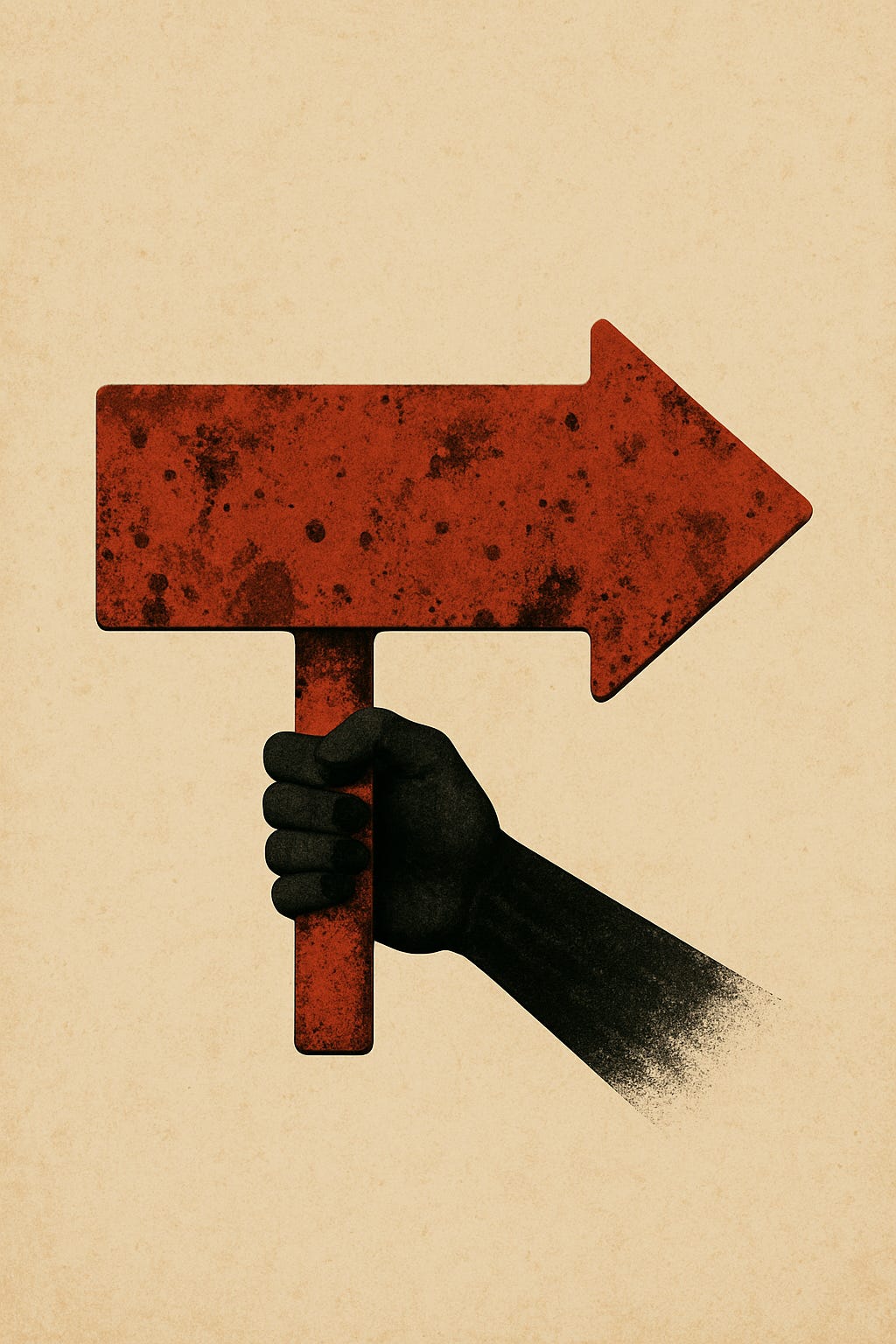
“The ends justify the means.”
The phrase lands with a stamp of authority, a way to close an argument without having to make one. It has the sound of hard-headed realism, the tone of someone too serious to be bothered with hand-wringing. And yet, every time I hear it, I have to check my pockets.
Because if an ideology has to reassure you—especially if unsolicited—that the ends justify the means, what it is really saying is: don’t look too closely at what we’re doing right now. It is a preemptive excuse, a promise that whatever ugliness lies before you will be washed away by the brilliance of the future. Translated more honestly, it means: the ugliness is permanent, but we would rather you not notice.
The trick works because it relies on a false dichotomy. It insists that ends and means can be separated, that one can be judged without reference to the other. History and experience say otherwise. The path to any goal leaves its mark on the goal itself. The road matters.
Philosophy trained us to put actions in one box and outcomes in another. Consequentialists peer into the ends box; deontologists squint at the means. One camp risks excusing horrors for the sake of progress, the other risks rigidity that strangles reform. But the neatness of the boxes is a lie. Violence cannot be locked in the “means” compartment while freedom waits untouched in the “ends.” Violence leaks. It reshapes whatever it touches. A relationship maintained by manipulation is not a relationship plus manipulation; it is a relationship of manipulation.
The dichotomy offers comfort because it simplifies. It says: just pick the box that matters. But ethics rarely comes in clean packages. Since Machiavelli, history has shown the perils of shortcut morality. Liberty, equality, fraternity became guillotines in the square. Communism promised emancipation, delivered gulags. Fascism promised renewal, delivered extermination.
The story does not stop with fallen ideologies. The Tuskegee syphilis study carried the same logic into medicine. For forty years, government researchers withheld treatment from Black men with syphilis in the name of “science.” The supposed end—knowledge for public health—was meant to justify grotesque means: deception, neglect, exploitation. The harm metastasized into mistrust, shaping communities’ relationship to medicine for generations. The shortcut discredited not only the study but the very institutions that defended it.
Even in moments that seem to test the principle, the stain does not fade. The atomic bombings of Hiroshima and Nagasaki were justified as the means to end the war and save countless lives. Even if one grants the calculus, the decision left shadows that never lifted: radiation sickness, intergenerational trauma, and a world forever changed by the precedent of nuclear fire. The “end” may have been achieved, but the means became an enduring wound.
This logic survives in miniature. The manager who fudges numbers “for the good of the company.” The partner who lies “to protect” the relationship. The tech firm that ships unsafe products because speed is “what the world needs.” Each one counts on the same escape clause: look away from the mess, imagine the payoff.
The reality is harsher: every act plants something. Some seeds grow into justice, others into bitterness. You don’t get to plant thorns and expect roses.
The civil rights movement understood this. Nonviolence was not only tactic—it was rehearsal. Dignity demanded dignity. The method was the message. Gandhi said the same: “the means are the ends in the making.”
Where cruelty is excused as a step toward justice, cruelty becomes the legacy. Revolutions that eat their children do not wake up benevolent; they keep chewing, and call it history’s appetite.
Why does the shortcut keep returning? Because it is easy. It offers clarity in a messy world. It collapses the anguish of trade-offs into a ready-made script: if the future is bright enough, today’s damage doesn’t matter. It feels practical, decisive. And decisiveness is intoxicating.
But necessity often smuggles in laziness. It is easier to declare an act “necessary” than to sit in uncertainty, or admit the line between tolerable and intolerable is blurry.
Rigid shortcut thinking exacts a price. It diffuses responsibility—who wants to gum up a noble goal by objecting? It breeds self-deception—if the end is good enough, what can’t be justified? It nurtures authoritarian reflexes by making dissent treachery and hesitation betrayal.
In individuals, it rationalizes. In institutions, it breeds secrecy. In communities, it corrodes trust.
The Alternative
The alternative is not rule-worship or the fantasy of immaculate purity. It is integration. Ends and means are mirrors: each reflects the other.
Pragmatism reminds us that methods are never neutral. John Dewey wrote that democracy was less a destination than a way of living together—procedures, habits, experiments that carry their own moral weight. You cannot suppress voices today and expect freedom tomorrow.
Virtue ethics presses the point closer. Character is forged not by dreaming of outcomes but by practicing the habits that embody them. We are not granted virtues in bulk at the end of a struggle; they accumulate in the choices we make along the way.
And democratic theory insists that legitimacy itself is inseparable from process. A law passed or system developed in secrecy or coercion cannot be washed clean by clever design. The procedure is not prelude to justice—it is part of justice.
Integration does not promise perfection. Trade-offs will still sting. But it rejects the laziness of shortcuts. It asks us to practice our values in motion, to build the future from the material of the present. The path is not separate from the destination; the path is the destination in slow motion.
Here is a useful tip. When someone reaches for “the ends justify the means” before you even raise the objection, assume the means are rotten and the ends will be spoiled. Healthy leaders and movements don’t need to pre-justify themselves. They show, instead, how their methods align with their aims.
In most situations, ends and means are not strangers or enemies. They are kin. The dichotomy between them is a false neatness, a trick for those who want to dodge the mess of ethics.
When someone tells you their ends justify their means without being asked, take it as confession: the road is crooked and they know it.
Because every just society, every durable peace, every trustworthy discovery, every loving relationship inherits the imprint of the path that made it. The end is already present in the means. To pretend otherwise is not moral wisdom but moral evasion.
And evasion is always the most dangerous place to begin.