
Privacy Preserving Oversight
Can you have privacy, autonomy, and accountability?

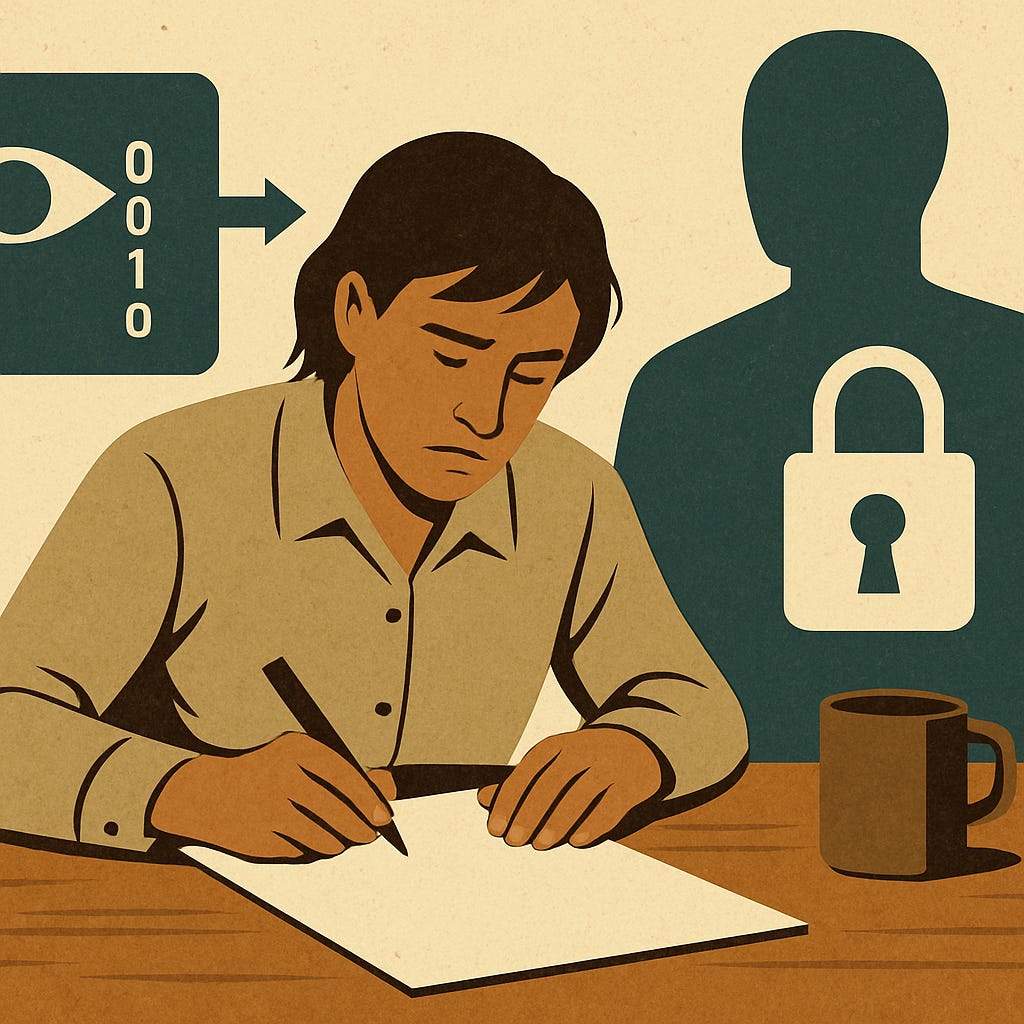
Every country that tries to care for its people eventually collides with the same paradox. We build social programs so no one falls through the cracks, yet we must protect these programs from those who would game them. The moment we create a system to help, we also create incentives to exploit it. That tension becomes part of the national fabric. You can feel it when someone fills out a benefits form at a kitchen table, trying to get through the week. They are not thinking about auditors or algorithms. They are just trying to survive. But the system behind them is vast, complicated, and fragile, and every year it absorbs pressure from many directions. The country wants generosity and discipline at the same time. It wants oversight without intrusion. It wants integrity without suspicion. It wants to trust and still verify.
Oversight becomes necessary because a public program succeeds only if the public believes it works. The smallest patterns of fraud can erode credibility. The slightest hint of waste can turn support into resentment. The critics of social programs rarely need to prove widespread abuse. They only need anecdotes that sound like symbols of something larger. A single news clip becomes a stand-in for thousands of ordinary families who play by the rules. That is the strange burden of public programs. To remain worthy of belief, they must be protected with care. Oversight is stewardship. It is the difficult work of making sure that what people fund with their taxes reaches those the programs were created to serve.
But privacy has its own moral weight. A society should not require people to trade their dignity for help. Excessive monitoring can turn a social program into something that feels like probation. Once personal data is collected, it becomes hard to contain. It can be repurposed, inferred, shared, or combined with other sources of information in ways no one foresaw. Even if the original intention is noble, the effect can be corrosive. Privacy is not just a legal boundary. It is the condition that lets people move through life without feeling watched. It protects autonomy, identity, and agency. It gives people the freedom to pursue help without fearing that the act of asking will attach a shadow to them.
This is where the traditional methods of oversight struggle. Many were designed for an earlier era. They depend on heavy data matching, broad eligibility checks, or predictive models built on large collections of personal information. These tools can be accurate and efficient, but they are also blunt. They sweep up everyone to catch a few. They create systems that know far more about citizens than citizens know about the systems. And they introduce a quiet risk. The more data a government collects in the name of program integrity, the more it becomes possible to use that data for purposes that go beyond protecting the program.
The challenge is to imagine a different path. It requires techniques that let us find patterns without exposing the people within them. Differential privacy can add statistical noise so individuals cannot be reverse engineered. Secure multiparty computation can allow separate agencies to compare information without revealing the raw data they hold. Zero knowledge proofs can let applicants demonstrate eligibility without exposing every detail beneath the claim. Federated learning can train oversight models on distributed data that never leaves local systems. Audit on demand architectures can limit access until there is a specific, legally justified reason to examine a particular case. Each of these tools reframes the problem. Oversight becomes a matter of math and system design rather than a justification for collecting more personal information.
Still, privacy alone is not enough. People need to feel that they are not subject to machines that operate above their heads. Autonomy requires that individuals understand how decisions are made, know how to challenge those decisions when they believe errors have occurred, and access humans who can correct course. A benefits program that feels like a black box erodes trust even when it is accurate. A system that engages people openly, explains itself, and provides recourse can build trust even when it occasionally stumbles. The difference is not technological. Instead, It is relational.
Trust is both what allows oversight to work and what good oversight should create. When people see that systems respect their privacy, they feel less like suspects and more like participants. When oversight is restrained, clear, and justified, it signals something important. The government is not hunting for mistakes but protecting a shared resource. This dynamic matters in a polarized age. If a country wants its social programs to endure, it must maintain the belief that these programs treat people with fairness and respect. Without that belief, even the best designed benefit structure will face political headwinds.
The national challenge is harder than it appears. No country runs a single social program. It runs many, in layers, across states, agencies, contractors, and legacy systems. Incentives differ. Funding structures differ. Political pressures differ. It is easy for well intentioned leaders to default to heavier monitoring simply because it is what the old systems can do. There is comfort in gathering more data, even when it is not needed. There is comfort in the feeling of control. But this comfort is misleading. It trades long term trust for short term certainty. A generous society cannot afford that trade.
What the country needs is a model of accountable compassion. Oversight should be proportionate to risk. Data should be minimized, encrypted, and stored only as long as necessary. Algorithms should focus on system patterns instead of invasive individual profiles whenever possible. People should have clear rights to understand and contest decisions made about them. Reporting should be transparent such that the public sees both the successes and the safeguards. In this model, oversight is not just something that happens to programs and people. Oversight is something done in service of them, their dollar, and their community.
The deeper question is what kind of society we want to be. A country that values care must protect the systems that express that care. A country that values freedom must ensure its institutions do not erode personal autonomy in the name of efficiency. Privacy preserving oversight is a way to honor our seemingly conflicting values, harmoniously, together. It says that help should be offered without humiliation and that integrity can be protected without creating a culture of suspicion. It is one of the defining challenges of mature democracies. If we meet it well, we prove that generosity and vigilance can coexist. If we fail, we leave people believing they must choose between support and dignity. The choice we make will make or break trust for generations, because it will reveal what we believe about one another and what kind of nation we hope to maintain.