
The New Clerisy
Intellect, merit, and stewardship

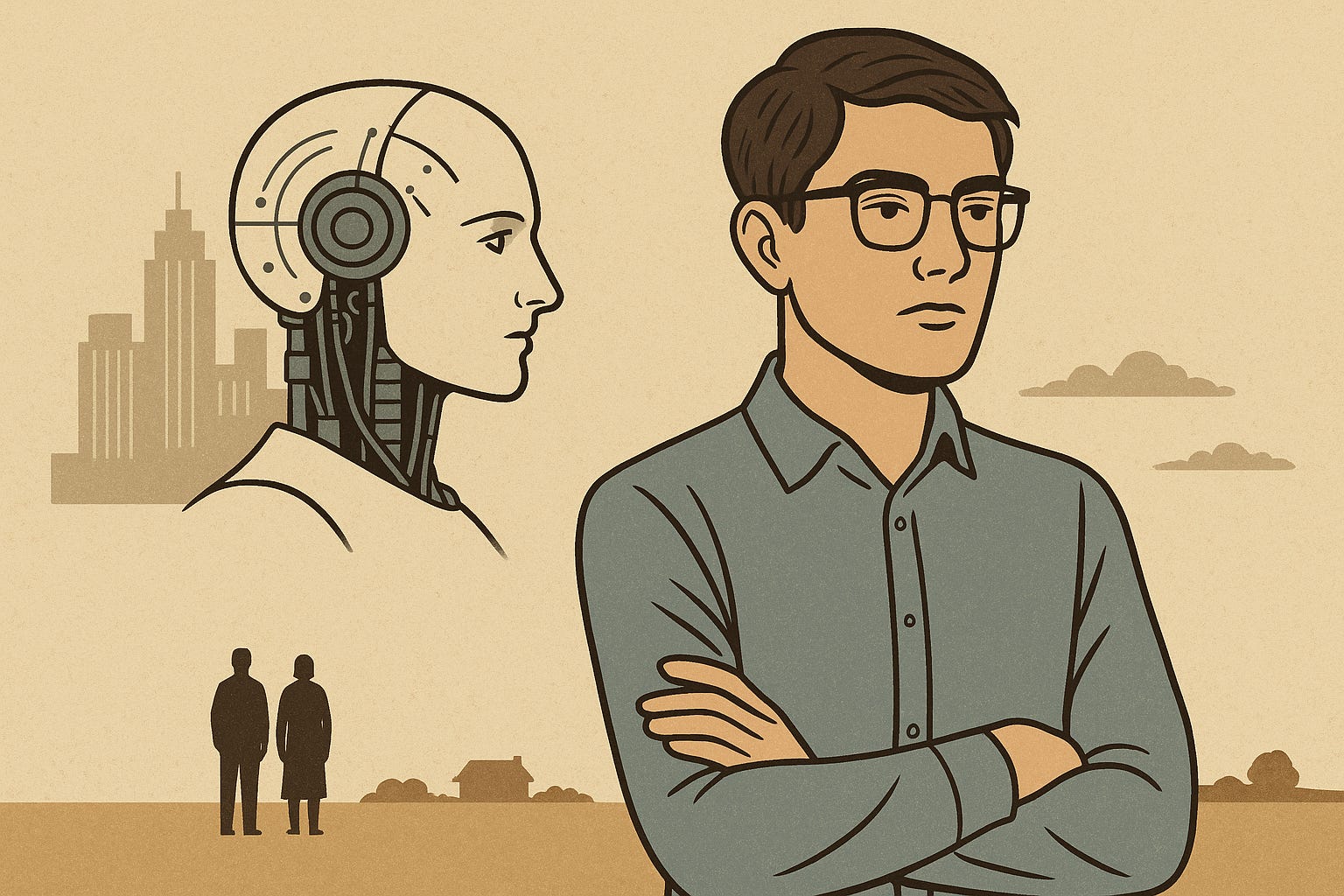
They grew up believing intelligence could save them. Not wealth or inheritance, but mastery of thought. They learned to analyze, to optimize, to interpret the world through systems. It was the only faith that felt earned. They rose through schools and fellowships that rewarded abstraction, learned to speak fluently about fairness and innovation, and became the curators of modern reason. And yet, for all their brilliance, they drifted far from the world they claimed to understand.
The new intellectual elite is self-made but self-enclosed. They live in the conviction that intellect is merit, and merit, morality. They see complexity as proof of virtue, and their own proficiency as a public good. In practice, this becomes a form of distance. They describe communities they do not live in and prescribe solutions for lives they will never touch. They have learned to care at scale but not in person.
Meritocracy once promised fairness: the best would rise by effort, not birth. But merit became performance, and performance became identity. Success no longer signified service but selection. Intelligence hardened into hierarchy. Those fluent in the language of institutions came to see their worldview as universal. They live among the like-minded, clustered in a few cities where ideas circulate faster than empathy. Geography became ideology. The elite grew ever more connected to one another and less connected to everyone else.
This concentration of intellect breeds blindness. Surrounded by reflection, the new clerisy mistakes familiarity for consensus. They measure the country through data sets and dashboards but have forgotten how to listen without interpreting. They assume understanding is a matter of information, when it is often a matter of presence. Their intelligence is real but untethered, like light without heat.
Then came the machines that could think. Artificial intelligence seemed at first to validate their supremacy: the world would now run on cognition, and they were its native class. But AI revealed something unsettling. The very traits they prized—pattern recognition, argument, synthesis—could be automated. The intellectual found himself mirrored by the machine, and the reflection was too close for comfort.
AI did not replace intelligence; it exaggerated its tendencies. It made abstraction effortless and judgment optional. It allowed analysis to multiply without responsibility. Many welcomed this, seeing in AI a way to scale their minds. But scaling intellect without deepening wisdom only widens the distance between thought and consequence. The more they could predict, the less they had to feel.
The workplace adapted to this logic. Decision-making became delegation to systems, and systems became the new custodians of reason. Young professionals once defined by their mental agility became operators of abstraction. They learned to manage what they no longer understood. The tools meant to enhance judgment replaced it instead. What emerged was a strange symmetry between the intellectual and the machine: both efficient, both detached, both confident in their neutrality.
Hubris hides behind neutrality. It lets intellect mistake itself for virtue, assuming that knowledge alone can justify authority. The new clerisy speaks of empathy but practices optimization. They design fairness but live apart from its tests. They speak often of inclusion but rarely of belonging. The people they claim to serve sense this distance instinctively. To be analyzed is not to be seen. To be modeled is not to be known.
This estrangement is not born of malice. It is the unintended outcome of a class that believes it earned its place and therefore deserves its distance. Yet every system built from that distance inherits its blindness. Policies crafted from data miss the undercurrents of dignity. Technologies built for efficiency flatten the human texture of work. What begins as intellect ends as insulation.
The disconnection is moral as much as cultural. Intelligence without humility drifts toward abstraction for its own sake. The clerisy’s faith in cognition has replaced an older belief in stewardship. They’ve lost the idea that knowledge carries a duty of care. The old intellectual sought to translate truth into understanding; the new one translates understanding into influence. Thought becomes brand. Visibility becomes value.
But intellect detached from life cannot sustain itself. It feeds on attention yet starves for meaning. When the gap between those who think and those who live grows too wide, resentment fills it. The public begins to suspect that the experts no longer act in good faith, and sometimes they are right. When intellect ceases to serve, it becomes a performance of control.
The paradox of artificial intelligence is that it exposes the limits of human intelligence while encouraging the illusion of mastery. We can now generate endless insight without wisdom, endless communication without connection. The machine produces clarity without conscience, and in doing so, it holds up a mirror to its makers. It shows what intelligence looks like when stripped of care.
If the clerisy is to recover its purpose, it must unlearn the instinct to dominate through knowledge. The first act of renewal is proximity, they must reenter the ordinary world, where intellect is not a badge but a tool. It means speaking less, listening more, and remembering that understanding is not proven by prediction but by presence.
Humility is not the opposite of intellect; it is its completion. It reminds the thinker that the mind’s work is only half of wisdom, and the other half is attention. To think clearly is admirable. To think kindly is necessary. The country does not need fewer minds; it needs minds capable of belonging.
Perhaps the age of artificial intelligence will force that recognition. As machines inherit the calculable, what remains for humans are the incalculable things: trust, wonder, conscience. These cannot be optimized. They require a form of intelligence that no algorithm can simulate, a moral intelligence born of contact with the real.
The true crisis of the intellectual elite is not that they know too much but that they feel too little. To reconnect knowledge with care will take more than reform. It will take a quiet revolution of character: the willingness to stand among rather than above, to see knowledge as service rather than status.
In time, the hierarchy of intelligence will collapse under the weight of its own abstraction. What will remain are those who can bridge mind and meaning. The work ahead is not to outthink the machine, but to remember why we think at all. The measure of intellect is not brilliance but stewardship, the ability to hold understanding in a way that keeps others from falling apart.
When that becomes our standard again, the distance between the few and the many will narrow. The clerisy will return to what it should have been all along: a community of translators between reason and life. The light of intellect will mean something only if it can warm as well as illuminate. Perhaps the next act of genius will be simple: to kneel, to listen, and to build understanding that can be lived in.